
'India missed the software products revolution (and now is in danger of missing the platform revolution), complacent that we are the software experts of the world based on IT services prowess,' points out Rajeev Srinivasan.
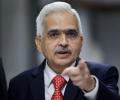
Reserve Bank Governor Shaktikanta Das on Wednesday said underlying economic activity in India continues to be strong, but external factors will cause some "dent" to the economy. Speaking at the BFSI Insight Summit 2022 organised by Business Standard, Das said the RBI tracks 70 fast moving indicators and most of them are in the "green box". It is the external sector, mired by a fear of recession or clear visibility about slowing growth in a large part of the world, where the challenges lie, he said, adding that the impact of external demand will "dent" the economy.

The government's agenda also includes the Cryptocurrency and Regulation of Official Digital Currency Bill, 2021.

"On demonetisation, across the board for pretty much all of industry, and CPG (Consumer Packaged Goods) in particular because it hit the individual retailer significantly, demonetisation had a significant impact on our India business in Q4," Nooyi said during an earnings call for Pepsi's fourth quarter that ended on December 2016.

In significant push towards a less-cash economy, Prime Minister Narendra Modi on Friday announced starting a biometric payment system using Aadhar platform within two weeks even as he exhorted citizens to adopt digital currency from the new year.

It's mid-morning and the two-kilometre stretch from Rashbehari Avenue to Gariahat Market is bustling with activity. Dotted with saree shops and hawker stalls that sell everything, from hairpins, hangers and towels to hosiery, mobile phone covers and kurtas, this is one of South Kolkata's busiest shopping areas. And it is beginning to wake up to the Paytm crisis.

Two-wheeler exports from India fell by 17.8 per cent to 3.65 million units in 2022-23 (FY23), according to data released by the Society of Indian Automobile Manufacturers (Siam) on Thursday. This decline is due to a rise in global inflation and the weakening of economies and currencies in key export markets of Africa, Latin America (LatAm), and South Asia. In contrast to FY23, two-wheeler exports from India jumped 35.4 per cent to 4.44 million units in 2021-22 (FY22).

Use of blockchain technology will ensure that banks will not be blindsided like in the case of the Nirav Modi-Mehul Choksi blowout at PNB, says Raghu Mohan.

On November 8, 2016, Prime Minister Modi had announced the decision to withdraw Rs 500 and Rs 1,000 denomination notes with the ultimate aim of reducing corruption and black money in the economy.

Uncertainties on account of COVID-19 pandemic have increased the demand for currency notes not only in India but across the globe, official sources said, dismissing the criticism that demonetisation has failed to reduce cash in the economy. Government sources said that growth of the digital payments system post-demonetisation will ultimately curb the dependence on cash. Official data points out a jump in digital payments through different modes, including plastic cards, net banking and Unified Payments Interface (UPI).

Over the past four quarters, the Sensex companies' earnings trajectory has improved sharply because of a weak rupee.

Fitch Ratings has upgraded Reliance Industries Ltd's (RIL) rating to 'BBB', one notch above India's sovereign rating, as the company benefits from cash flow generation across diversified business segments and continuation of deleveraging. In a statement, Fitch said it has upgraded RIL's long-term foreign-currency issuer default rating (IDR) to 'BBB', from 'BBB-', with a negative outlook. At the same time, the agency has affirmed RIL's long-term local-currency IDR at 'BBB+' with a stable outlook.
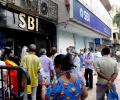
Amendments would be required in the Banking Companies (Acquisition and Transfer of Undertakings) Act, 1970 and the Banking Companies (Acquisition and Transfer of Undertakings) Act, 1980 for privatisation, sources said.

With an 11% return in 2022, gold was the best-performing asset class, beating equities, debt, real estate etc, by a considerable margin. Rishi Piparaiya explains why gold needs to be a part of our investment portfolio.
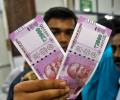
Image used for representational purpose only. Photograph: Jayanta Dey/Reuters The Congress also said demonetisation has come a full circle and added that the Rs 2,000 note was a "band-aid to cover up the foolish decision of demonetising" Rs 500 and Rs 1,000 notes.

Stating that implementation of the demonetisation policy had its "share of challenges", Nooyi hoped that things will return to normal by the second quarter.
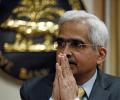
Reserve Bank Governor Shaktikanta Das on Friday said the rupee is holding up relatively well when compared to the currencies of emerging market peers and advanced economies. Days after the domestic currency breached the 80-level against the dollar, Das said Reserve Bank of India (RBI) has zero tolerance for volatile and bumpy movement in the rupee and added that the central bank actions have helped in smoother movement. He said RBI has been supplying US dollars to the market to ensure adequate supply of liquidity and also clarified that the central bank does not target a particular level for the currency.

While no specific state-oriented sops were rolled out, a strong thread of political wellness ran through the Budget.

The rupee appreciated 7 paise to 79.74 against the US dollar in early trade on Thursday as a positive trend in domestic equities supported the local unit. However, a strong American currency overseas and forex outflows restricted the rupee's gain, dealers said. At the interbank foreign exchange, the rupee opened at 79.72 against the American dollar, then went lower to trade at 79.74 against the greenback in early deals, registering a gain of 7 paise over the last close.

The government plans to bring down its stake to 26 per cent in these two banks, which are yet to be identified. This may not come in the way of getting investors for these banks, provided the government is willing to step back rather than run them the way it had been doing for over five decades since these banks were nationalised, points out Tamal Bandyopadhyay.
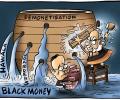
November 8 marks 6 years after demonetisation. A K Bhattacharya reveals how the prime minister and the RBI worked together for months before Modi's 8 pm speech. A riveting excerpt from The Rise Of Goliath: Twelve Disruptions That Changed India.

The depreciation in rupee may pose a problem for students who have taken loans from Indian lenders.

IT major TCS said 2014-15 will be better than the ongoing fiscal on account of uptick in client spending in the US and Europe and growth in demand for technologies like cloud, mobility and Big Data.

The currency market won't care for our moans, groans, cries and sighs. The rupee will find its own level, explains Tamal Bandyopadhyay.

Employers will also have the option to pay wages in cash.

The results of Indian IT services players in the just-concluded fourth quarter of 2021-22 are expected to reveal continuing growth momentum as demand surges on the back of digital transformations and the cloud shift, but analysts anticipate margins to be under pressure due to supply challenges. Analysts covering the sector expect revenue commentary should be strong despite the Russia-Ukraine conflict and inflation. Top-line growth will be driven by broad-based demand with a strong uptick for cloud, digital, cybersecurity, data analytics, and artificial intelligence, among other services.

'The economy needs to deliver the expected 7.5% growth for the markets to deliver better than single digit returns.' 'Any disappointment in growth can see the markets correcting downwards.'

The rupee depreciated 6 paise to 77.50 against the US dollar in the opening trade on Wednesday as a surging American currency in the overseas markets and persistent foreign fund outflows weighed on investor sentiment. Besides, rising global crude prices impacted the domestic unit, forex traders said. However, a higher opening in the domestic equity market restricted the rupee's fall, they added.

As the FM said, this is a Budget that lays the foundation for the next 25 years, observes Kumar Mangalam Birla.

Rapid strides in digital payments notwithstanding, the Indian economy will likely remain cash-dependent for many years to come, at least that's what the automated teller machine makers and cash logistics companies are betting on. After growing at over 20 per cent for most of 2020, currency in circulation growth fell to 8.5 per cent as of October 29 this year, shows data from the Reserve Bank of India (RBI). The reason for the steep rise in currency last year was the uncertainties related to the Coronavirus (Covid-19) pandemic, where people preferred to hoard cash to meet exigencies.

Infosys said it is in discussion with over 10 institutions globally for deploying the solution
The rising COVID-19 infections across the country are a matter of concern, but it may not impact the ongoing economic revival as one does not foresee lockdowns, Reserve Bank Governor Shaktikanta Das said on Thursday. The economic revival will continue "unabated", Das said, asserting that there is no need for a downward revision of RBI's 10.5 per cent GDP growth forecast for FY22. Speaking at Times Network's India Economic Conclave, Das said, "We have 'insurance' to protect economic revival like a fast-paced vaccination drive, greater ability among people to follow COVID protocols", and one does not see lockdowns as well.

IT major Accenture's second straight cut in its revenue growth forecast for FY23 suggests there is more pain ahead for the Indian IT sector, say analysts. Accenture has lowered the top end of its FY23 growth guidance in constant currency (CC) to 9 per cent from 10 per cent earlier. The firm, which follows a September-August fiscal cycle, expects a 2-6 per cent CC growth in Q4 of FY23 (June-August 2023) versus the 6-10 per cent prior guidance.
'A strong foreign exchange reserve is the best safety net against global spillovers.'
Finance Minister Nirmala Sitharaman on Tuesday said many countries have evinced interest for bilateral trade in the rupee after the RBI announced a mechanism recently. Speaking at Mindmine Summit 2022, she said this along with other steps taken by the government is towards full capital account convertibility. "It isn't the rouble-rupee which was in the old format. "Now this (bilateral rupee trade) formulation, which I am glad the RBI has come up at a time which was so critical," she said when asked if India is ready for capital account convertibility.

The Central Board of Direct Taxes (CBDT) has issued detailed guidelines on facilitating tax deducted at source (TDS) on virtual digital assets (VDA) or crypto assets, under which date of transfer and mode of payment will have to be specified. From July 1, TDS of 1 per cent will be levied on payments towards virtual digital assets or cryptocurrencies beyond Rs 10,000 in a year, as the Finance Act 2022 has introduced Section 194S in the income tax (I-T) Act. The department has explained different scenarios through six questions to remove difficulties.
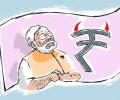
It is a classic case of extremes: The worst contraction in GDP along with the highest-ever levels of cash in the economy; and a severe dent in consumption together with strong growth in bank deposits and digital payments.

Following the surge in demand, Bitcoin is being quoted on Indian exchanges at 25-28 per cent higher than the international price, reports Rajesh Bhayani.

The Supreme Court in a 4:1 majority verdict upheld the government's 2016 decision to demonetise Rs 1,000 and Rs 500 denomination notes, saying the decision-making process was not flawed.

India has received the fourth set of Swiss bank account details of its nationals and organisations as part of an annual automatic information exchange under which Switzerland has shared particulars of nearly 34 lakh financial accounts with 101 countries.
